
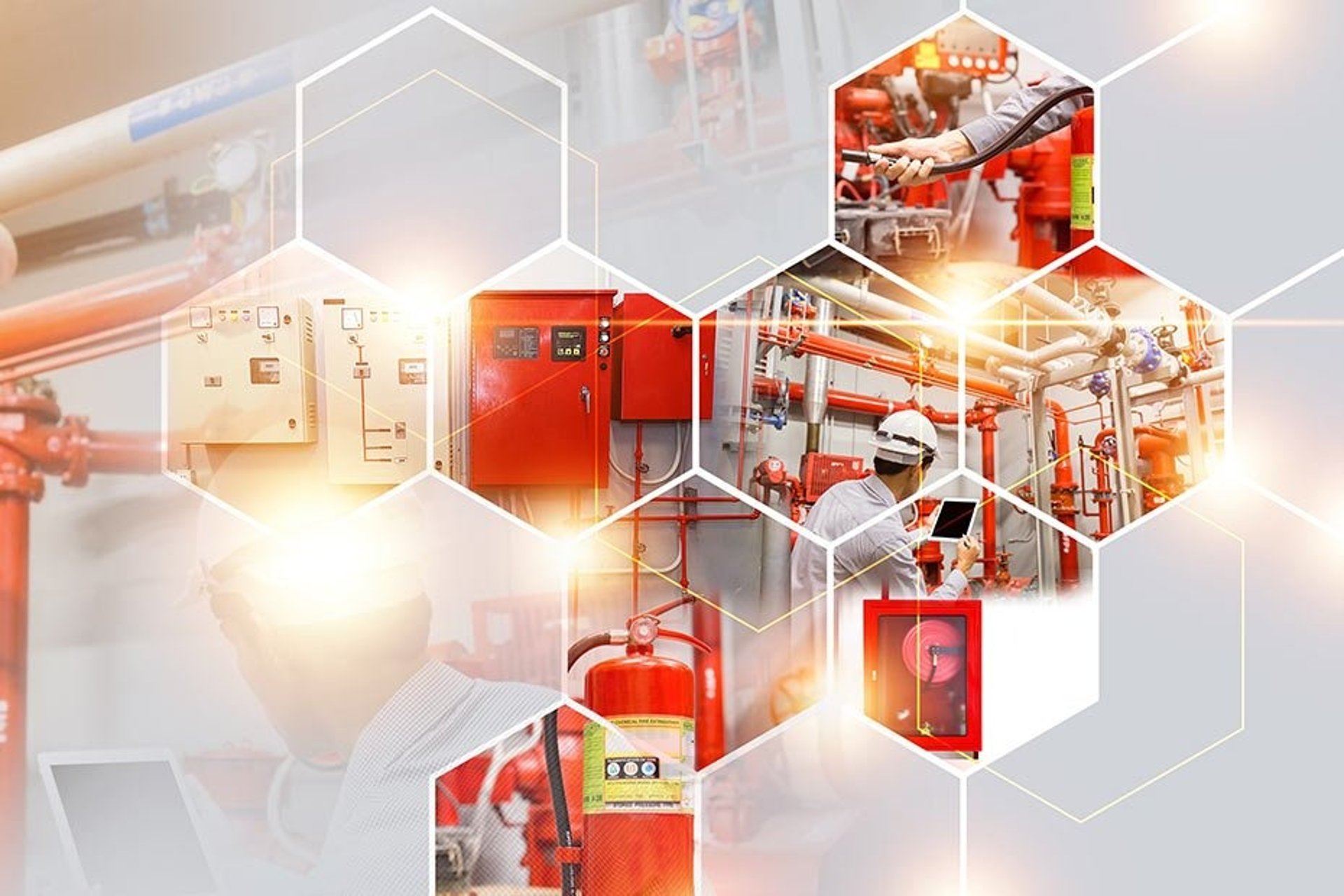
Fire Solutions
Engineered fire pump systems for safety and reliability
We engineer, supply, and commission complete fire-pump systems that safeguard people, assets, and operations. Our scope covers design, equipment, installation, testing, and lifecycle support fully compliant with NFPA 20, with UL/FM options when required by the Authority Having Jurisdiction (AHJ).
Main Pumps
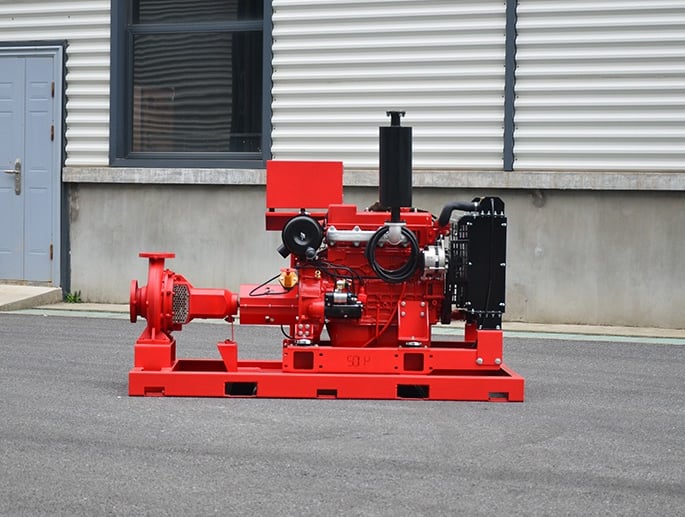
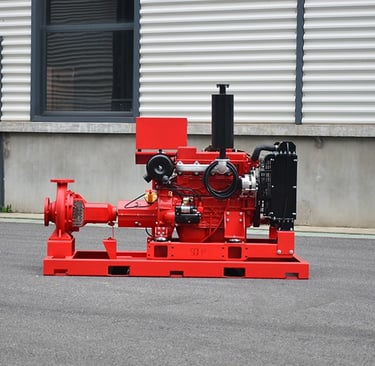
Diesel or electric main pumps sized to hydraulic demand for sprinklers, standpipes, and hydrants. We specify horizontal split-case, end-suction, or vertical-turbine units with verified NPSH and stable curves. Foundations, alignment, and vibration limits are ensured. Commissioning covers churn, rated, and 150% tests, with spares and SLAs.
Jockey Pumps
Jockey pumps maintain system pressure and prevent main-pump short cycling. We size for high head, low flow, and integrate listed controllers, pressure switches, isolation and check valves, and relief protection. Settings coordinate with alarms and start/stop logic. Routine churn and periodic flow tests confirm readiness.
Pump Rooms
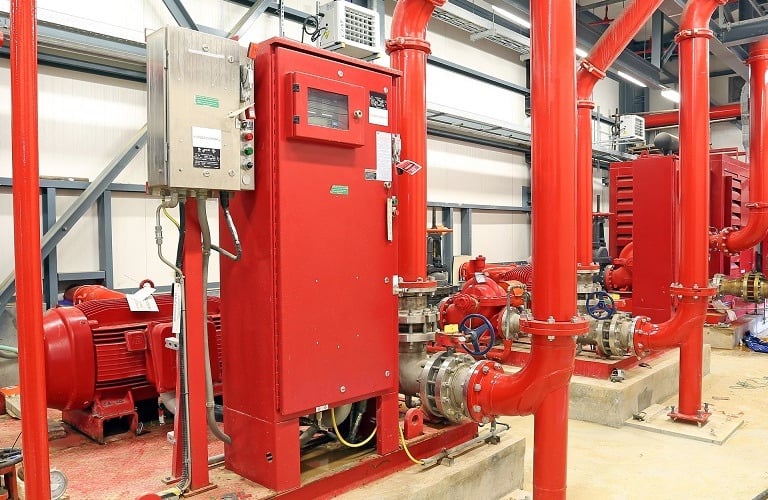
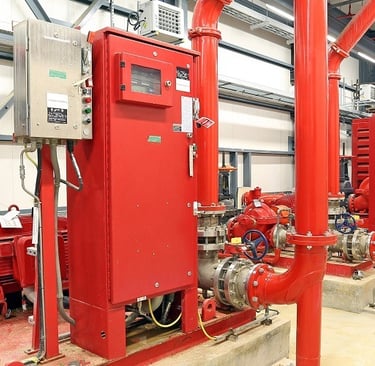
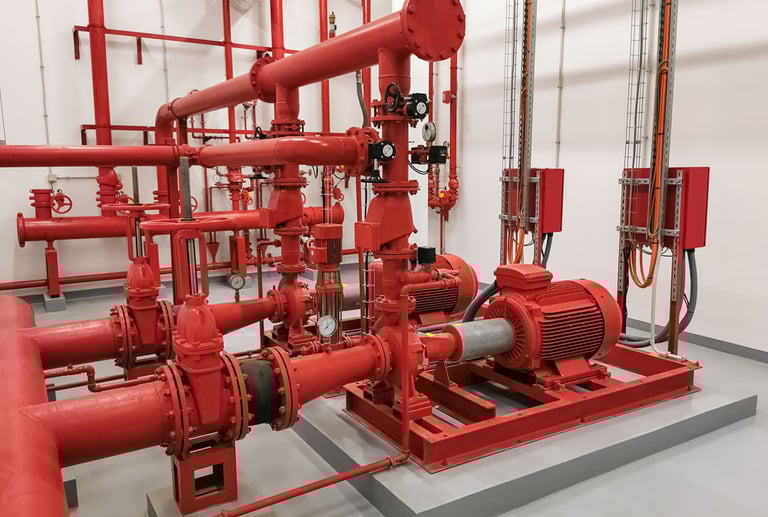
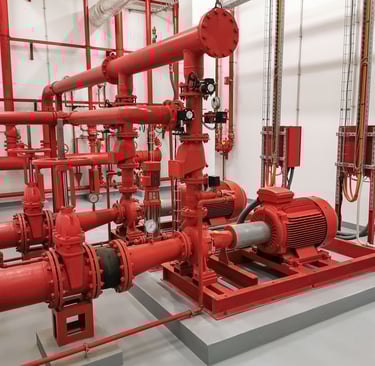
Code-true pump rooms engineered to NFPA 20 with UL/FM options. Packages include listed controllers, diesel day tanks or electric feeders, suction/discharge manifolds, test header, isolation/check/relief valves, drainage and ventilation, lighting, and monitoring. Layouts provide maintenance clearances, seismic bracing, electrical coordination, FAT/SAT, and as-built documentation for AHJ approval.
What We Deliver
Pump rooms and skids: Diesel or electric main pumps, jockey pumps for pressure maintenance, listed controllers, suction/discharge manifolds, test headers, and flow-measurement devices, with isolation, check, and relief valves, plus code-compliant drainage and lighting.
Pump types: Horizontal split-case, end-suction, vertical turbine, and multistage units engineered to match hydraulic demand for sprinklers, standpipes, and hydrants.
Fuel and auxiliaries: Day tanks with double-wall containment, filtration/polishing, ventilation, spill control, battery chargers, jacket-water heaters, and exhaust attenuation to meet noise regulations.
Controls and monitoring: Listed fire-pump controllers, automatic transfer systems for electric supplies, status and fault signaling to fire alarm panels (NFPA 72), and optional BMS/SCADA integration for remote supervision and data trending.
Piping and accessories: Backflow prevention, pressure-reducing/relief valves, air-release valves, flexible connectors, and seismic bracing per local codes.
Engineering Approach
We begin with a hazard and demand assessment analyzing occupancy type, design density, hose allowances, elevation, and water sources.
Through hydraulic calculations, we verify required flow and pressure at the most remote point, accounting for friction losses and elevation head.
We select pump curves that meet rated duty and achieve 150% of rated flow at not less than 65% of rated pressure, ensuring stable performance without surge or cavitation.
We validate NPSH, suction pressure, and layout geometry for alignment, foundation stiffness, and straight-run lengths as per NFPA 20.
Compliance & Documentation
Our handover package includes:
P&IDs, room layouts, single-line diagrams, data sheets, and cause-and-effect matrices
Inspection and Test Plans (ITPs) and method statements
Factory (FAT) and Site (SAT) acceptance tests covering churn, rated flow, and 150% capacity, verified using calibrated instruments
Certified performance curves and as-built documentation submitted to the AHJ
Commissioning & Training
Our specialists perform:
Alignment, vibration, and noise tests
Controller programming and alarm/interlock validation
Emergency stop verification and system function tests
Operators receive hands-on training for weekly churn tests, monthly/annual flow tests, and routine NFPA 25 inspections to maintain operational readiness.
Lifecycle Services
We provide preventive-maintenance contracts, 24/7 call-out support, and genuine OEM spare parts.
Remote monitoring enables early alerts for pressure deviations, diesel engine performance, battery status, and run-hour thresholds.
Our programs include:
Seal and bearing inspections
Packing and relief-valve adjustments
Controller firmware updates
These practices sustain system reliability, code compliance, and fire-readiness over the full asset lifecycle.
EPTCO ensures every fire system meets the highest standards of protection, performance, and compliance so your facility stays ready, reliable, and safe at every moment.
FAQs
What is NFPA 20?
NFPA 20 is the installation standard for stationary fire pumps. It defines pump selection, drivers, controllers, piping, relief devices, testing, and acceptance criteria.
Compliance ensures a reliable fire-water supply, verified performance curves, and smoother Authority Having Jurisdiction (AHJ) review and approval.
How do you ensure quality?
Do you offer support?
What is your scope?
We supply:
Horizontal split-case, end-suction, and vertical-turbine fire pumps
Diesel or electric drivers with multistage options for high-rise pressure
Jockey pumps to maintain system pressure
UL/FM-listed equipment when required by the AHJ to meet code and insurance standards
Perform hazard classification and hydraulic calculations
Verify NPSH, suction conditions, and stable pump curves
Implement QA/QC plans with ITPs, calibrated instruments, and FAT/SAT testing
Conduct churn, rated, and 150 % flow tests
Certified technicians handle alignment, vibration checks, and controller logic validation
Yes.
Preventive-maintenance contracts with 24/7 call-out service
Remote monitoring of pressure, engine, and controller health
Supply of genuine spare parts
Operator training for weekly churn and periodic flow tests
Service-level agreements (SLAs) defining response and restoration targets to preserve readiness
We deliver end-to-end solutions including:
Site survey, hydraulic modeling, and detailed design
Equipment supply, fuel systems, controllers, and electrical works
Integration with sprinkler, standpipe, and fire-alarm panels
Commissioning, full documentation, and operator training
Lifecycle service and compliance reporting for sustained reliability and approval continuity
What types of pumps?
Contact
Get in touch
Support
Follow
0503097003
Copyright © 2025 EPTCO All rights reserved
0112422995
0590061269
0112422995

